Advertorial Disclosure: We may earn money or products from the companies mentioned in this post.”
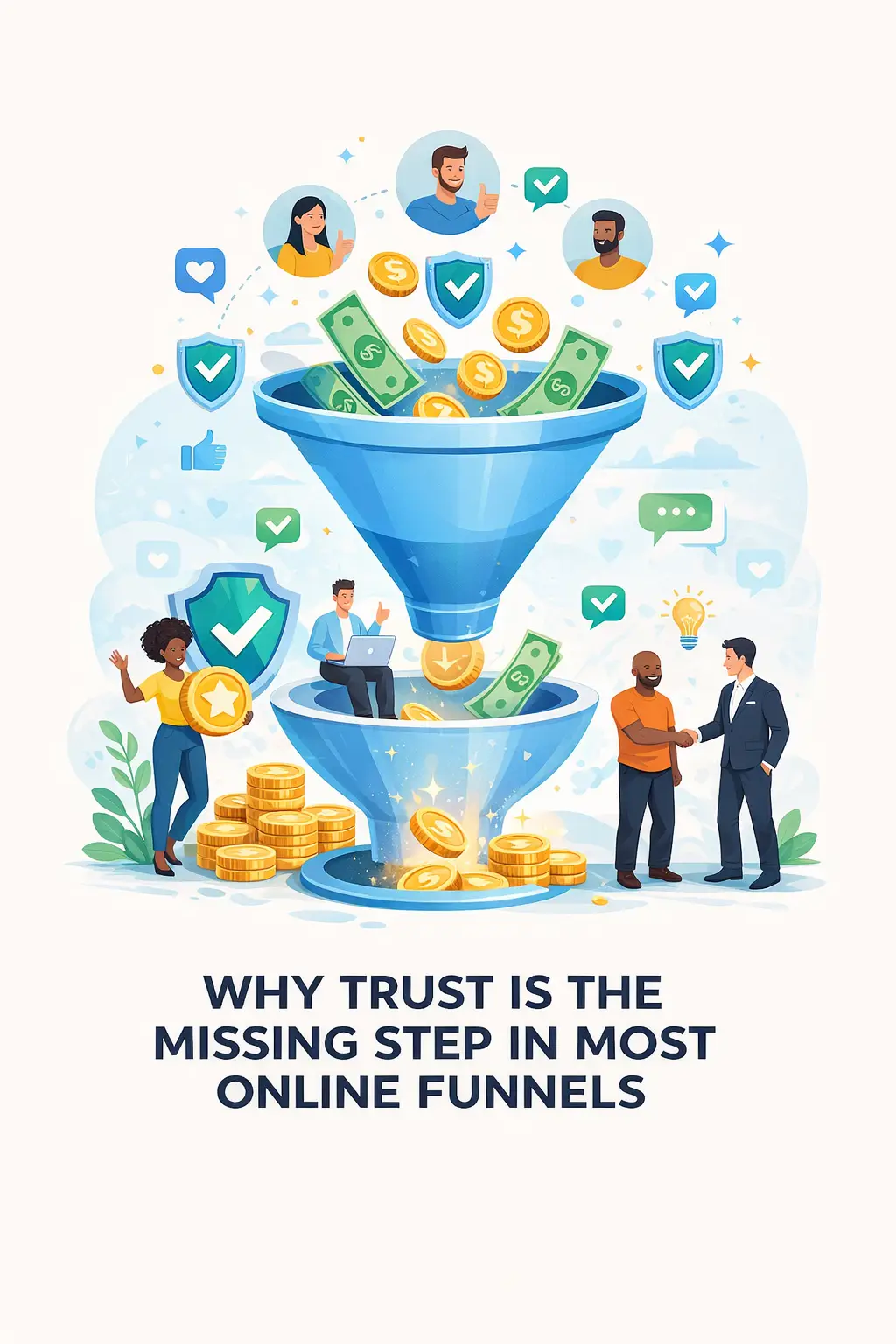
Most people believe success online comes from getting more traffic.
More posts. More ads. More visibility.
But after years in sales, and after building funnels both online and offline, I’ve learned something different:
Attention alone doesn’t create customers. Trust does.
And trust is the step most online funnels completely overlook.
The Moment I Realized What Was Really Happening
Years ago, I ran a funnel that connected directly to conversations happening on Facebook. Instead of sending people into a closed system where they had to figure everything out alone, the funnel led them into an active comment space.
People could ask questions openly.
They didn’t have to guess. They didn’t have to wonder if the product was real. They could simply ask.
And I answered.
Every concern, every hesitation, every question was handled right there in public view.
Something interesting started happening.
Customers who had already purchased began sharing their experiences in the comments. They talked about what they liked. They confirmed results. They reassured new visitors without being asked.
At first, I thought the increase in sales came from better traffic.
But that wasn’t it.
Sales increased because people weren’t just seeing a product anymore. They were watching trust form in real time.
What People Were Actually Buying
Looking back, the funnel itself wasn’t doing the selling alone.
The conversations were.
New visitors could see:
-
real questions being asked
-
real answers being given
-
real customers speaking up
-
real support happening instantly
Instead of relying on polished testimonials or marketing claims, buyers witnessed how problems were handled live.
And that changed everything.
Because the real question every buyer asks is simple:
“Is it safe for me to believe this?”
The comment section answered that question better than any sales page ever could.
The Four Elements of Trust That Changed Everything
What I experienced wasn’t accidental. It revealed four things that create trust faster than any marketing tactic.
1. Accessibility
People could reach me directly. There was no barrier between seller and customer. When people know they can ask questions and receive real answers, hesitation drops.
2. Transparency
Nothing was hidden. Questions and answers were public. When buyers see openness, skepticism fades.
3. Community Validation
Customers spoke for me. And people trust other customers far more than they trust marketing language.
4. Real-Time Authority
Instead of claiming expertise, I demonstrated it through conversation. Teaching builds authority faster than advertising ever will.
Why Many Online Funnels Struggle Today
Many modern funnels try to automate everything too early.
They remove conversation.
They remove visibility.
They remove human interaction.
The result is a technically perfect system that feels emotionally empty.
Funnels were never meant to replace trust.
They were meant to organize it.
A good funnel guides people toward clarity and confidence. It creates structure, but trust still grows through interaction, consistency, and real communication.
The Real Purpose of a Funnel
The goal of a funnel isn’t just to collect clicks or push people toward a checkout page.
The goal is to create an environment where trust can form naturally.
When people see questions answered, problems handled, and real experiences shared, buying stops feeling risky.
It starts feeling logical.
That’s when sales stop feeling forced and begin happening consistently.
What I’m Relearning Now
As I rebuild my online systems today, this lesson matters more than ever.
Technology changes.
Platforms change.
Tools evolve.
But people don’t.
Trust is still the bridge between attention and action.
Traffic gets attention.
Trust gets customers.
And the strongest funnels don’t eliminate conversation — they make space for it.
If you want to see the system I’m rebuilding step by step, you can start here →