Advertorial Disclosure: We may earn money or products from the companies mentioned in this post.”
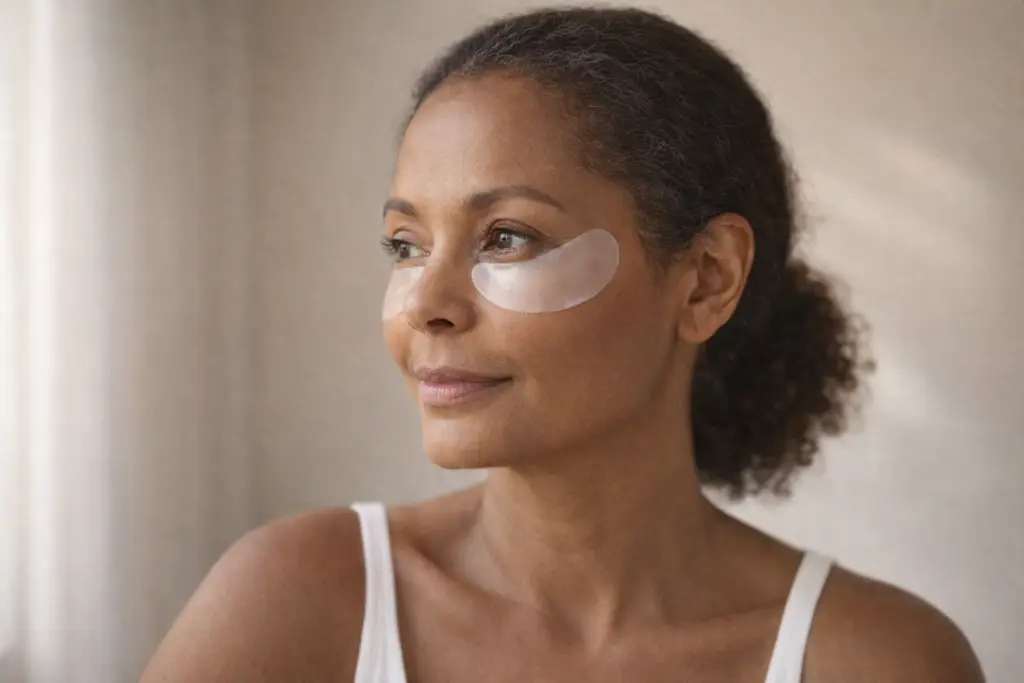
If you’ve ever wondered whether eye patches are a daily thing or a “special occasion” thing, you’re not alone. Frequency matters more than brand for most people over 40.
Daily vs 2–3x Per Week: What Actually Makes Sense After 40
One of the biggest misconceptions about under-eye patches is that using them more often automatically means better results. In reality, frequency should match your goal, not your hope.
Daily use is best thought of as hydration and temporary plumping. When used every day, eye patches help flood the under-eye area with moisture, reduce morning dryness, and give the skin a smoother, more refreshed look. This can be especially helpful if you wake up with tired-looking eyes, spend long hours in front of screens, or want your concealer to sit +++better during the day. The effects are noticeable, but they’re short-term by design.
Using eye patches 2–3 times per week, on the other hand, is more about maintenance and realism. This frequency works well for people who want to keep the under-eye area comfortable, hydrated, and supported without expecting dramatic daily changes. Think of it as upkeep rather than correction. Over time, this routine helps maintain softness and reduces the appearance of fatigue without becoming another daily obligation.
There’s also a common concern about “overusing” eye patches. The truth is, you’re not harming your skin by using them frequently. The skin under the eyes doesn’t get “addicted” or damaged by regular patch use. What does happen is diminishing returns. Once the skin is adequately hydrated, adding more patches doesn’t necessarily create better or longer-lasting results. At that point, you’re maintaining comfort rather than improving outcomes.
The key takeaway is simple:
Use eye patches as often as they serve you. Daily use for quick refresh and visible smoothness. A few times per week for steady maintenance. Both approaches are valid when expectations are aligned.
Once frequency is clear, the next question most people have is timing.
Morning vs Night: When Eye Patches Make the Most Sense
Another common question is whether under-eye patches work better in the morning or at night. The answer isn’t about effectiveness. It’s about timing and intent.
Morning use is ideal when your main concerns are puffiness, dullness, or tired-looking eyes. Overnight fluid retention, lack of sleep, or screen time can all make the under-eye area look swollen or heavy in the morning. Applying eye patches at this time can help temporarily de-puff, rehydrate the skin, and create a smoother surface for makeup. Many people notice that concealer applies more evenly and creases less after using patches first.
Nighttime use shifts the focus from appearance to comfort and recovery. At night, eye patches are less about visible puffiness and more about replenishing moisture after a long day. This can be especially useful in dry environments, during seasonal weather changes, or when the skin feels tight or fatigued. Night use also fits naturally into a slower skincare routine, making patches feel more like self-care than a quick fix.
There’s no rule that says you have to choose one or the other. Some people prefer morning use for practical reasons and save nighttime use for occasional relaxation. Others alternate based on how their skin feels. The important thing is that eye patches don’t rely on a strict schedule to work.
What matters most is consistency within your own routine. Whether you use them before makeup in the morning or as a calming step at night, eye patches are flexible. When they fit your lifestyle, they’re far more likely to be used regularly and that’s where the real benefit comes from.
Signs Under-Eye Patches Are Actually Working
Under-eye patches don’t work the way serums or treatments do, so judging their effectiveness requires a slightly different lens. The results are subtle, practical, and often immediate rather than dramatic.
One of the first signs eye patches are working is how the skin feels. After removal, the under-eye area should feel softer, more hydrated, and less tight. This comfort factor is easy to overlook, but it’s often the clearest indicator that the skin barrier is being supported.
Another common sign is reduced morning puffiness. While eye patches won’t permanently eliminate swelling, regular use can help the under-eye area look calmer and less heavy, especially after sleep. Many people notice their eyes look more awake, even if the effect fades later in the day.
You may also see that makeup applies more smoothly. Concealer tends to sit better on hydrated skin, with less creasing or patchiness. For many users, this alone makes eye patches feel worthwhile, even if the visual changes are subtle.
It’s equally important to understand what eye patches are not designed to fix. They won’t permanently erase dark circles caused by genetics or pigmentation, and they won’t dramatically change skin structure. When expectations stay realistic, eye patches tend to feel helpful rather than disappointing.
If your under-eye area feels more comfortable, looks slightly smoother, and appears less fatigued after use, the patches are doing what they’re meant to do. Anything beyond that should be viewed as a bonus, not a promise.
For those who want a simple, low-effort way to keep the under-eye area hydrated and comfortable, a well-made hydrogel eye patch can be an easy place to start.
Here’s an example of the type of hydrogel patch many people find easy to use consistently.