Advertorial Disclosure: We may earn money or products from the companies mentioned in this post.”
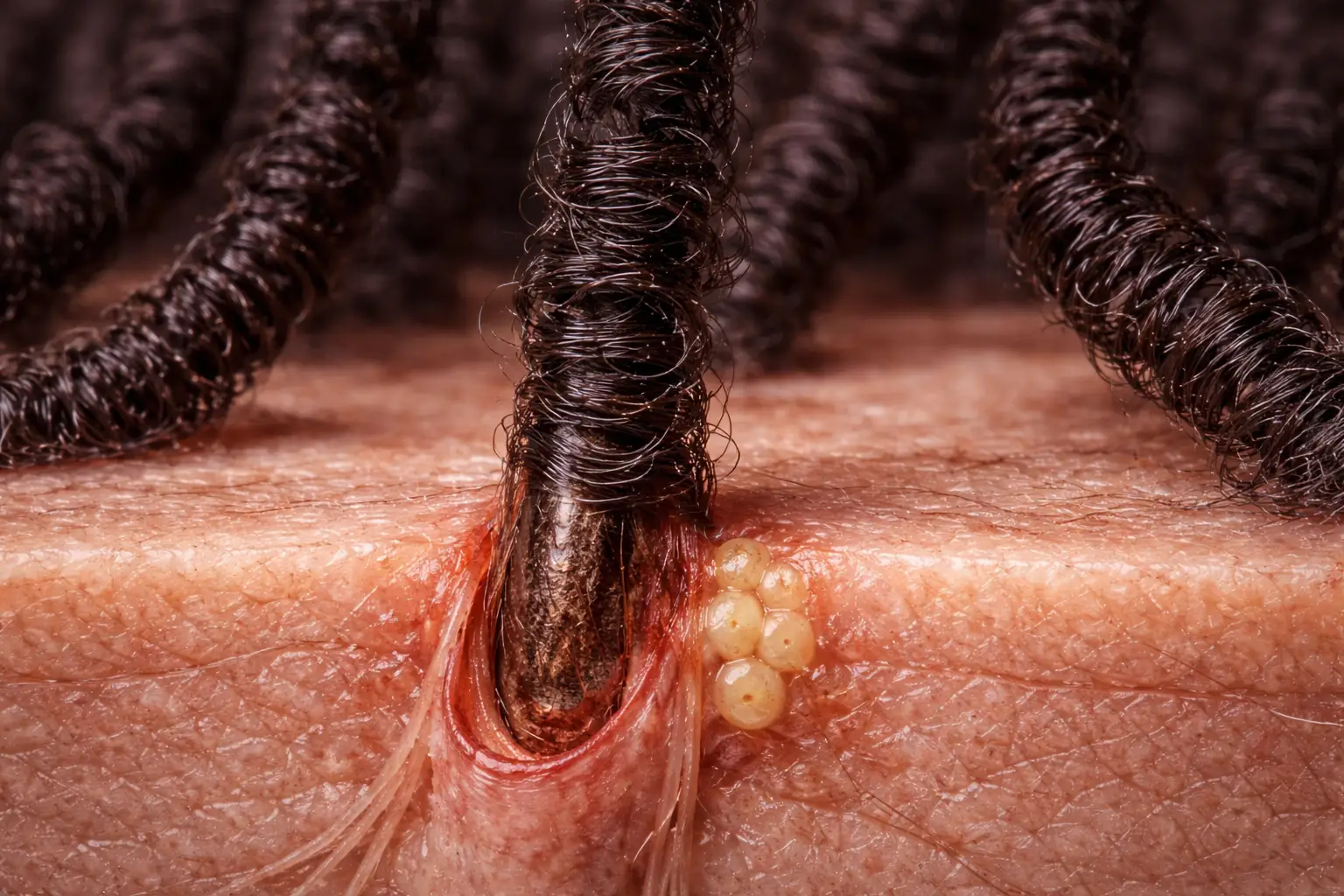
Most people believe hair loss starts with the hair they can see.
The thinning.
The shedding.
The widening part.
The hair left in the drain.
So naturally, the response is to attack the hair itself.
New shampoo.
New serum.
New oil.
“Growth” formulas promising faster results.
But hair loss doesn’t begin at the hair.
It begins beneath it.
Hair Is Not Alive. The Follicle Is.
Hair is a fiber.
It does not heal.
It does not regenerate.
It does not respond to motivation.
Hair is produced by a biological structure embedded in the scalp: the follicle.
That follicle lives inside skin tissue.
It depends on blood flow.
It responds to hormones.
It reacts to inflammation, stress, immune signals, and nutrient availability.
When the follicle environment is compromised, the body adjusts.
And the first thing it deprioritizes is hair production
Hair Loss Is a Side Effect, Not the Problem
When follicles are inflamed, miniaturizing, hormonally sensitive, or cycling abnormally, hair loss becomes a symptom, not a cause.
At that point:
-
No oil can override inflammation
-
No serum can outwork hormonal signaling
-
No shampoo can correct a disrupted growth cycle
Topical products may support the surface, but they cannot override biology.
This is why people experience:
-
irritation from products that “work” for others
-
inconsistent results
-
temporary gains followed by relapse
The issue isn’t the product.
It’s the context the follicle is operating in.
Why “Growth Products” Often Disappoint
-
The scalp is not a neutral surface.
It can be:
-
inflamed
-
barrier-compromised
-
overly sensitive
-
chronically stressed
For some people, oil-based products are soothing and protective.
For others, they trap heat, disrupt the barrier, or trigger irritation.For some, water-based or lightweight formulas feel better.
For others, they evaporate too quickly to offer support.This isn’t preference.
It’s physiology.Without understanding the scalp environment, even the “right” product can feel wrong.
-
Hair Growth Requires Safety, Not Stimulation
Here’s the part most marketing leaves out:
Hair only grows when the body feels safe enough to invest energy there.
If the system is under stress — inflammation, poor circulation, hormonal imbalance, nervous system overload — the body shifts into conservation mode.
Growth becomes optional.
That’s why addressing:
-
scalp health
-
inflammation
-
circulation
-
stress signaling
-
nutrient delivery
matters more than chasing stimulation.
You cannot force growth out of a system that is trying to protect itself.
This isn’t medical advice. It’s personal experience. Always talk to your healthcare provider about what’s right for you.
Diagnosis Isn’t Gatekeeping. It’s Respect.
Putting down the hair-loss shampoo isn’t giving up.
It’s getting honest.
Before treatment makes sense, you need to know:
-
why hair is shedding
-
what the follicle is responding to
-
how the scalp environment has changed
Hair loss is not a single condition.
It’s a category of outcomes.
Until you understand the cause, treatment is guesswork.
The Takeaway
Hair loss doesn’t start at the hair.
It starts at the follicle.
And the follicle responds to the entire system it lives in.
When that system is supported, hair follows.
When it isn’t, no product can outwork biology.