Advertorial Disclosure: We may earn money or products from the companies mentioned in this post.”
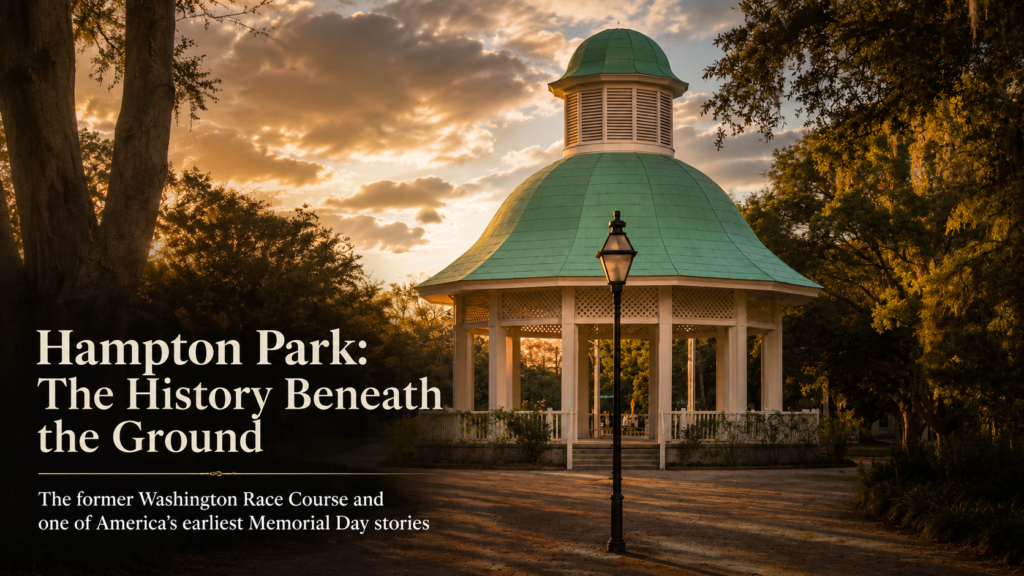
I was a grown man before I ever understood that Memorial Day had any real connection to Black history.
Before that, Memorial Day was mostly just a holiday weekend to me. A day off. Hot dogs. Hamburgers. Maybe a sale at the store or a cookout somewhere.
I can’t honestly say I had some deep personal connection to soldiers or military sacrifice, because I didn’t. I had no real connection to it. I had not been taught anything that made Memorial Day feel personal, historical, or meaningful to me.
The respect I did have came through people I cared about.
I have a couple of friends whose fathers are actually buried at Arlington National Cemetery. For them, Memorial Day was not abstract. It was connected to family, service, loss, and memory. And because I respected my friends, I respected that the day meant something to them.
But for me personally, the holiday still felt distant.
It felt like one of those national holidays that belonged to somebody else’s memory.
Then I started learning about Charleston, South Carolina, in 1865.
And that changed everything for me.
Why I’m Looking at This Through KIBA
I’m looking at this story through the lens of KIBA, a book I wrote about Black agency, self-determination, and the Gullah Geechee people who escaped slavery, moved toward the southern border, partnered with Spain, and helped create free Black towns in Florida.
That story changed the way I look at Black history.
KIBA is not just about what Black people suffered. It is about what Black people did. It is about initiative. Strategy. Movement. Negotiation. Courage. Community-building. And the ability to create power even when the official systems were built against us.
So when I came across the Memorial Day story in Charleston, I saw a connection.
Formerly enslaved people were not waiting for permission to define what the Civil War meant. They were not waiting for the government, the schools, or the newspapers to tell them how to honor the dead. They acted. They remembered. They created ceremony. They created meaning.
That is why this story belongs in the KIBA Journal.
The Race Course
The story begins at a place called the Washington Race Course and Jockey Club in Charleston.
When I first heard “race course,” I had to stop and ask: what does that mean? In this case, it was exactly what it sounds like. It was a horse racing track. A place connected to wealth, status, leisure, and the planter class of Charleston.
In other words, it was ground tied to the power structure of slavery.
That matters.
Because during the Civil War, Confederates turned that racecourse into a prison camp for Union soldiers. These prisoners were held under terrible conditions. Many died from disease and exposure. At least 257 Union soldiers were buried there in a mass grave. The Smithsonian National Museum of African American History and Culture describes the dead as 257 Union soldiers who died because of the poor conditions of the Confederate prison camp, and says they were exhumed from a mass grave and given proper burial grounds.
So think about that for a moment.
A place once used by the wealthy and powerful for entertainment became a place of suffering and death.
Then, after Charleston fell and the war was ending, formerly enslaved Black people came to that same ground and changed its meaning.
That is the part that grabbed me.
What I Thought at First
When I first heard this story, I misunderstood part of it.
In my mind, I thought formerly enslaved Black people had gone to rescue and honor Black Union soldiers who had been disrespected, mistreated, and buried in a mass grave.
And that would have been powerful by itself.
Black soldiers absolutely fought in the Civil War. Black troops were part of the Union cause. Black Union soldiers also participated in the May 1, 1865 ceremony in Charleston. But as I started looking closer, I realized the story may be even bigger than I first understood.
The historical accounts I found usually describe the men buried at the Washington Race Course as Union soldiers or Union prisoners of war, not specifically as Black soldiers. That changed the story for me.
Because if these formerly enslaved Black people were reburializing and honoring men who were mostly, or possibly entirely, White Union soldiers, then this was not only about racial loyalty.
It was about something deeper.
They were honoring sacrifice.
They were honoring the cause of freedom.
They were honoring men who died in a war that helped break the system of slavery.
That tells me something about the moral vision of those newly freed Black people.
They were not only thinking about themselves. They were thinking about what kind of nation should come after slavery.
They were saying, in effect:
These men died in a war connected to our freedom, and we will not allow them to remain in a mass grave without dignity.
That is what makes this story even more powerful to me.
Because KIBA is not just about Black people creating power for themselves. It is also about Black people understanding power, memory, justice, and humanity at a level this country still struggles to understand.
They had just come out of slavery, and yet they were already helping teach America how to remember its dead.
The Reburial
After the Confederate forces were gone, Black workers and formerly enslaved people helped dig up the Union dead from that mass grave.
They reburied them with dignity.
They built a proper cemetery.
They put up a fence.
They marked the place with the words:
“Martyrs of the Race Course.”
Historian David Blight’s account says Black workmen reburied the Union dead properly, built a fence around the cemetery, whitewashed it, and created an entrance marked “Martyrs of the Race Course.”
That phrase is powerful.
They were not just burying bodies. They were making a statement.
They were saying these men died in a war connected to our freedom, and they will not be left in a mass grave like their sacrifice meant nothing.
That is memory as power.
That is dignity as power.
That is what I mean by the KIBA lens: looking for the moment where Black people created agency, dignity, and power before permission was ever granted.
KIBA, to me, is about Black initiative before permission. It is about people who did not wait for somebody to give them authority before they acted with authority.
These formerly enslaved people were just coming out of slavery, but they understood something very deep: whoever controls memory helps control meaning.
They understood that burial is not just a private act. Public remembrance is political. Ceremony is political. Naming is political. Who gets honored, who gets forgotten, and who gets buried properly all say something about the nation.
One of the Earliest Memorial Day Ceremonies
On May 1, 1865, thousands of Black Charlestonians gathered at that racecourse for what many historians describe as one of the earliest known Memorial Day-style commemorations in America.
There were schoolchildren.
There were ministers.
There were teachers.
There were Union soldiers, including Black Union troops.
People brought flowers, sang, listened to sermons, and honored the dead.
The College of Charleston notes that historian David Blight and others connect the roots of Decoration Day to a ceremony held by freed slaves on May 1, 1865, at the remnants of a Confederate prison camp at Charleston’s Washington Race Course and Jockey Club, today known as Hampton Park.
Now, I want to be careful here.
Different towns and cities have made claims about the “first” Memorial Day. The national holiday developed over time, and what was often called Decoration Day became more formalized later. The first national Memorial Day observance came in 1868 at Arlington National Cemetery.
So I am not trying to flatten the whole history into one simple claim.
But this Charleston ceremony matters because of who organized it, where it happened, and what it meant.
Formerly enslaved people were not just participating in American memory.
They were shaping it.
They were standing on ground tied to the slaveholding class and saying, in effect:
We know what this war meant.
We know who died here.
We know what freedom cost.
And we are going to honor that sacrifice.
That is not passive remembrance.
That is agency.
Why Didn’t I Learn This?
The question that bothers me is simple:
Why didn’t I learn this as a child?
Why was I grown before I heard that formerly enslaved Black people may have helped shape one of the earliest Memorial Day commemorations in America?
If I had learned this earlier, Memorial Day would not have felt so disconnected from me.
It would not have been just a day off.
It would not have been only cookouts, sales, and a vague idea of a military holiday that had no real connection to my own life.
It would have had roots.
It would have had Black historical meaning.
And I don’t believe this history is only for Black children. Black children need to know it because it gives them connection, dignity, and a sense of agency.
But White children need to know it too.
Because when people don’t know the full story, they don’t know what to respect.
And when people do not respect each other’s history, the country becomes easier to divide.
I believe fuller history can create fuller citizens.
Not perfect citizens. Not people who agree on everything. But people who at least understand that America’s story is deeper, more complicated, and more connected than what many of us were taught.
If children of every background learned that formerly enslaved Black people helped honor Union soldiers and helped define the meaning of freedom, maybe more Americans would understand that Black history is not separate from American history.
It is American history.
Is the Race Course Still There?
Another thing I wanted to know was whether the Washington Race Course still exists.
The answer is no, not as a functioning horse racing track.
The old Washington Race Course site is now part of Hampton Park in Charleston, South Carolina. People can walk through that park today without necessarily knowing what happened there.
The racetrack itself is gone, but traces of the old oval shape remain in the park’s layout. South Carolina Picture Project notes that Mary Murray Drive, the road encircling Hampton Park, follows the historic Washington Race Track.
That hit me too.
Because so much history in America is hidden in plain sight.
Sometimes it is paved over.
Sometimes it is renamed.
Sometimes it is landscaped.
Sometimes people walk their dogs, take pictures, ride bikes, or sit on benches without knowing they are standing on ground where suffering happened, where courage happened, where memory was created.
That does not mean every place has to be frozen in time.
But it does mean the story should not disappear.
A park can be beautiful and still tell the truth.
A road can be useful and still carry memory.
A city can grow and still be honest about the ground it is built on.
That is part of what KIBA is about for me.
Learning to see what is underneath the surface.
A Pattern Bigger Than One Ceremony
The more I sit with this story, the more I see a pattern.
At first, I thought formerly enslaved Black people were going back to rescue and honor Black soldiers.
But as I looked closer, the story became even larger.
They were honoring Union soldiers because they understood what those deaths represented. They were not only honoring race. They were honoring sacrifice, freedom, and the meaning of the war itself.
And when I look at American history, I see that same pattern again and again.
Black people have often fought from the bottom of American society, but the victories did not stay at the bottom.
They lifted the whole country.
The Civil Rights Movement was led and powered largely by Black Americans fighting for dignity, voting rights, equal access, and full citizenship. But those gains did not only benefit Black people.
They expanded the meaning of rights in America.
They made this country more open, more accountable, and more respected in the eyes of the world.
That is something more people need to understand.
People come to America from all over the world and benefit from rights, opportunities, and protections that were strengthened because Black people organized, marched, suffered, voted, sued, preached, boycotted, built institutions, and forced the country to live closer to its own promises.
And yet, too often, some people come here and absorb the same disrespect for Black people that already exists in the culture.
They enjoy the doors that Black struggle helped open, but do not always understand who helped open them.
That is why this history matters.
Respect should come from knowledge.
If people understood that Black Americans have not only fought for ourselves, but have repeatedly helped expand democracy for everyone, maybe there would be more respect, more honesty, and less racial confusion in this country.
That is part of the KIBA lens too.
KIBA is not only about Black survival.
It is about Black agency that reshaped America.
From the formerly enslaved people in Charleston who honored Union dead, to the Civil Rights Movement that forced America to broaden its promise, the pattern is there:
Black people have often created power for themselves, but in doing so, they created a better country for others too.
The Bigger Lesson
The lesson of this story is not simply, “Black people were involved in Memorial Day.”
That is true, but it is not deep enough.
The deeper lesson is that formerly enslaved people understood power.
They understood that if a nation was going to remember the Civil War, then the meaning of that war could not be left only in the hands of the people who fought to preserve slavery.
They understood that the dead had to be honored.
They understood that public ceremony could teach a lesson.
They understood that dignity could be restored through action.
They understood that even before full citizenship was secure, they could behave as citizens.
That is the part I keep coming back to.
They did not wait for permission.
They acted.
They dug.
They buried.
They named.
They gathered.
They remembered.
And by doing that, they claimed a kind of political and moral power.
What This Teaches Us Today
This is not just about the past.
If KIBA is going to mean anything now, then every historical story has to ask a current-day question:
What does this teach us about power today?
To me, the answer is this: we cannot afford to be passive about memory.
We cannot wait for schools, politicians, media companies, or institutions to tell the full story for us.
We have to research.
We have to document.
We have to teach.
We have to build platforms.
We have to preserve names, places, businesses, families, cemeteries, neighborhoods, and stories.
That is not just history work.
That is power work.
Because people who do not know their history are easier to dismiss.
People who do not know their contribution are easier to silence.
People who do not know their agency are easier to convince that they have none.
But when you learn a story like this, something changes.
Memorial Day stops being only a cookout.
It becomes a question.
Who gets remembered?
Who gets erased?
Who controls the story?
Who has the courage to recover what was buried?
That is why I’m starting here.
Because this story shows what KIBA is really about: Black people creating power before permission was ever given.
And maybe, if more of us learned this history, Black children and white children, adults and elders, citizens from every background, we would have a better America.
Not because history solves everything.
But because truth gives respect somewhere to stand.
Source Notes
This article draws from historical accounts of the May 1, 1865 Charleston commemoration at the Washington Race Course, especially historian David Blight’s work on Decoration Day, the Smithsonian National Museum of African American History and Culture’s article on the first Memorial Day, the College of Charleston’s summary of the history, and historical information on Hampton Park and the former Washington Race Course.
Thank you for this unkown lesson.
Not only do I know of what the white man fought for .
I now know what the Black Man gave to this country.
How sad to only learn this now.
I’m ashamed 😔
Susan, thank you so much for taking the time to read the article and for responding with such honesty. That means a great deal to me.
First, please don’t carry shame into your spirit. Shame can be heavy, and I don’t believe that is what this kind of history is meant to produce. I hope instead that you can receive it the way I’m receiving it: with surprise, curiosity, and a deeper desire to understand why so much of this was never taught, or at least never taught prominently.
You are already a thoughtful and wonderful person, even without having known this particular piece of history. My hope is that learning it only adds another layer of understanding, compassion, and awareness to the way you move through the world.
One of the reasons I’m writing about this is because I believe a fuller understanding of Black history helps all of us. It gives us more respect, more context, and a better foundation for relating to people whose backgrounds and experiences may be different from our own.
I appreciate your openness, Susan. Thank you again for reading, and I hope you and your family have a meaningful Memorial Day.
Thank you for this piece Errol, enlightening and educational. For more than 50 years we’ve enjoyed each others’ experience, kindness, humor, athleticism, intellect, opinion and faith. Endeavoring to know someone without judgment, understanding and searching for truth indeed gives respect somewhere to stand. I willforever cherish our friendship and all we have shared. Blessings to you and your family this Memorial day.
Gene, thank you for taking the time to read the article and respond so thoughtfully. That means a lot to me.
I’m trying to expand my voice and contribute something more constructive to the online conversations that are so often politically charged and negative.
Because of where I was raised and what I was taught, I believe our society has been deprived of certain truths, especially when it comes to Black history and how it has been taught, or not taught, in our schools.
My belief is that if all of us, Black, White, Asian, and everyone else, had a more balanced understanding of Black history, it would benefit the whole nation. It would give people more respect, more context, and a stronger foundation for understanding each other.
I cherish your friendship as well. Knowing you and your family has contributed to my own ability to accept and appreciate people whose life experiences and perspectives may be different from mine. It also showed me how much we have in common. That kind of friendship matters.
Blessings to you and your family, Gene. Have a meaningful Memorial Day.
Still teaching me about racial history fifty years later. Thanks for this insightful, informative, and inspirational article. As a retired teacher I truly connected to the line “those who control memory control meaning”. A situation happening in my state of Florida where the government is responsible for controlling what is being taught in our schools, and mandating for teachers what they can and can’t teach about racial history and other topics. Well said my dear friend.
Bob, thank you so much for taking the time to read the article.
Honestly, I’m just now learning about some of this myself. I’ve always been passionate about Black history, and really, history in general. But earlier in life, when I began to realize how much of our history had been intentionally hidden or distorted, it shook me. Since then, I’ve considered myself a forever student.
The response I’m getting from this article is making me seriously rethink my lane online.
And yes, the memory piece is key. Those who control memory have a powerful hand in shaping meaning, and that is why this history matters so much.