Advertorial Disclosure: We may earn money or products from the companies mentioned in this post.”
In grammar school, we learned a single direction for freedom.
North.
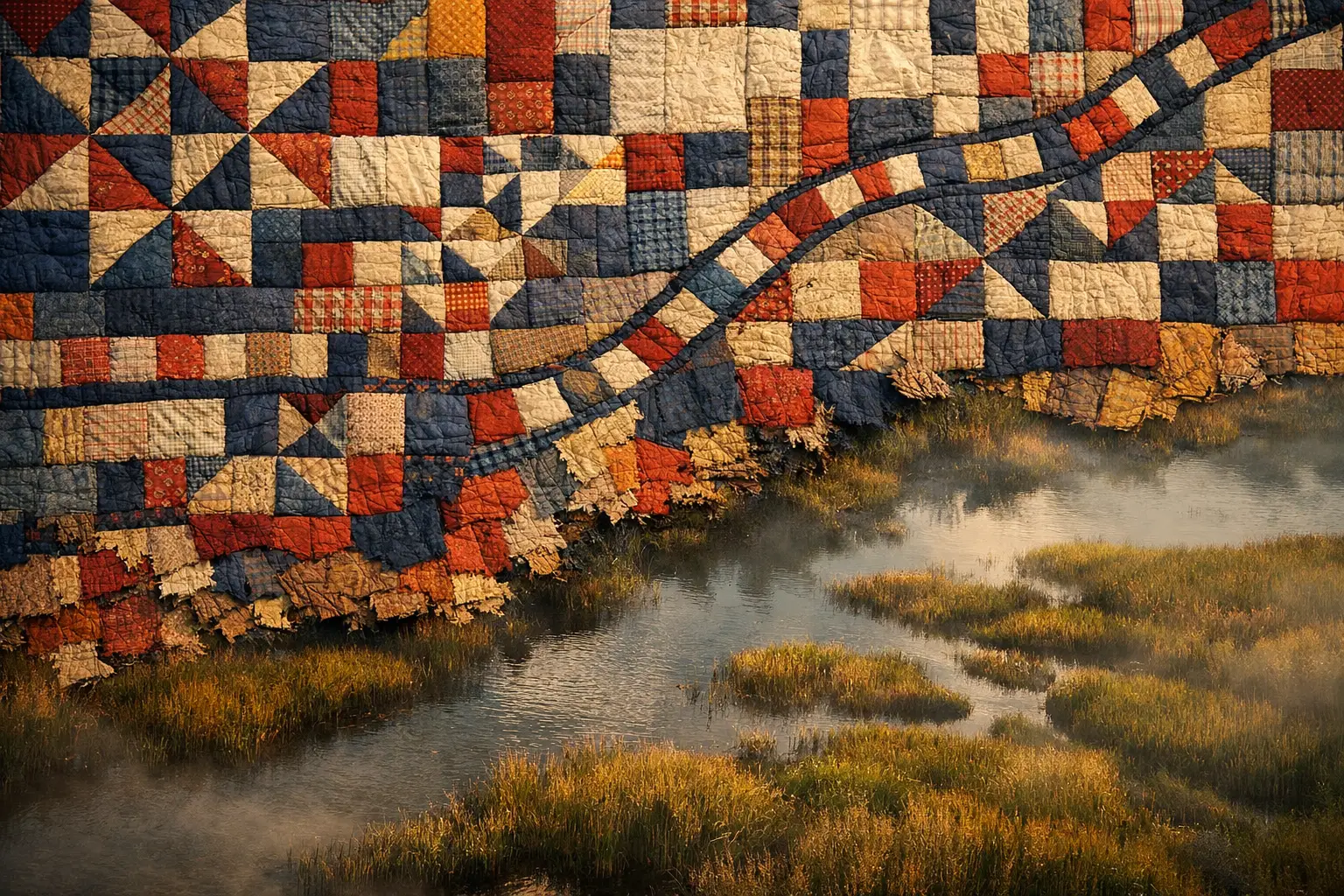
We learned the story of Harriet Tubman, who is often quoted as saying she freed hundreds of enslaved people and could have freed more if only they had known they were enslaved. We were taught about the Underground Railroad, coded quilts, the North Star, and safe houses that led toward Canada.
That story matters. It is heroic. It is true.
But it is not the whole map.
What I don’t remember learning, what many of us were never taught at all, is that there was another international border.
Not to the north.
To the south.
And that omission changes everything.
The Border That History Softened
Long before the United States existed, Florida was not American. It was Spanish.
That distinction mattered.
In the late 1600s, Spain made a calculated decision that rewired the geography of freedom: any enslaved African who escaped British colonies and reached Spanish Florida would be granted freedom, provided they converted to Catholicism and pledged loyalty to the Spanish Crown.
This was not charity. It was strategy.
Spain understood something the British feared: enslaved Africans were not just labor. They were knowledge. They were skill. They were military potential.
Florida became a pressure point. A living challenge to the British slave system.
Freedom, in this version of history, did not wait for permission.
It crossed borders.
Fort Mose Was Not a Secret. It Was a Threat.
In 1738, just north of St. Augustine, Spain established Fort Mose, the first legally sanctioned free Black town in what would become the United States.
Let that settle.
A free Black settlement.
Populated by formerly enslaved Africans.
Armed.
Organized.
Trained to defend Spanish territory from British attack.
These were not passive refugees hiding in swamps.
They were militia.
They were builders.
They were people who had already decided that freedom was not something to be requested later. It was something to be taken, defended, and maintained.
Many of these men and women came from the rice plantations of South Carolina and Georgia. From marshlands and barrier islands. From environments nearly identical to the terrain around St. Augustine.
Culturally, linguistically, and tactically, these communities overlap with what we now call the Gullah Geechee people.
Before the name existed, the people did.
The Gullah Geechee Lens Changes the Story
From a Gullah Geechee perspective, this history lands differently.
The traditional narrative centers freedom as something that arrives in 1863, carried by law, signed by Abraham Lincoln, and delivered downward.
But Gullah Geechee history suggests another truth running underneath the official one:
Freedom was already being practiced.
Enslaved Africans:
escaped across empires
negotiated new identities
preserved African languages and kinship systems
trained militarily
defended territory
lived free lives generations before emancipation was declared
This doesn’t diminish Lincoln’s role. It reframes it.
From this vantage point, emancipation looks less like a gift and more like a recognition of a reality that Black people had already forced into existence.
Why We Were Never Shown This Map
The northern route makes for a cleaner moral arc:
enslaved people flee
allies assist
the state eventually does the right thing
The southern route complicates that story.
It shows Black people:
acting independently
leveraging international politics
choosing foreign allegiance over bondage
bearing arms long before the Civil War
shaping outcomes without waiting for American approval
That story centers Black agency too clearly.
It disrupts the idea that freedom required instruction.
So it was minimized. Softened. Left out.
Not erased. Just quietly folded.
Freedom Had More Than One Direction
The Underground Railroad remains sacred.
But it was not the only road.
Some paths ran south, through swamps and coastal corridors, toward Spanish forts and Black towns flying foreign flags.
Some paths did not end in Canada.
They ended in Florida.
And some communities, like the Gullah Geechee, would later remember this not as a theory, but as inherited knowledge passed through language, land, and survival itself.
History didn’t hide this story by accident.
It hid it because once you see the full map, you can no longer believe freedom was simply given.
It was claimed.
And long before it was proclaimed, it was already being lived.