Advertorial Disclosure: We may earn money or products from the companies mentioned in this post.”
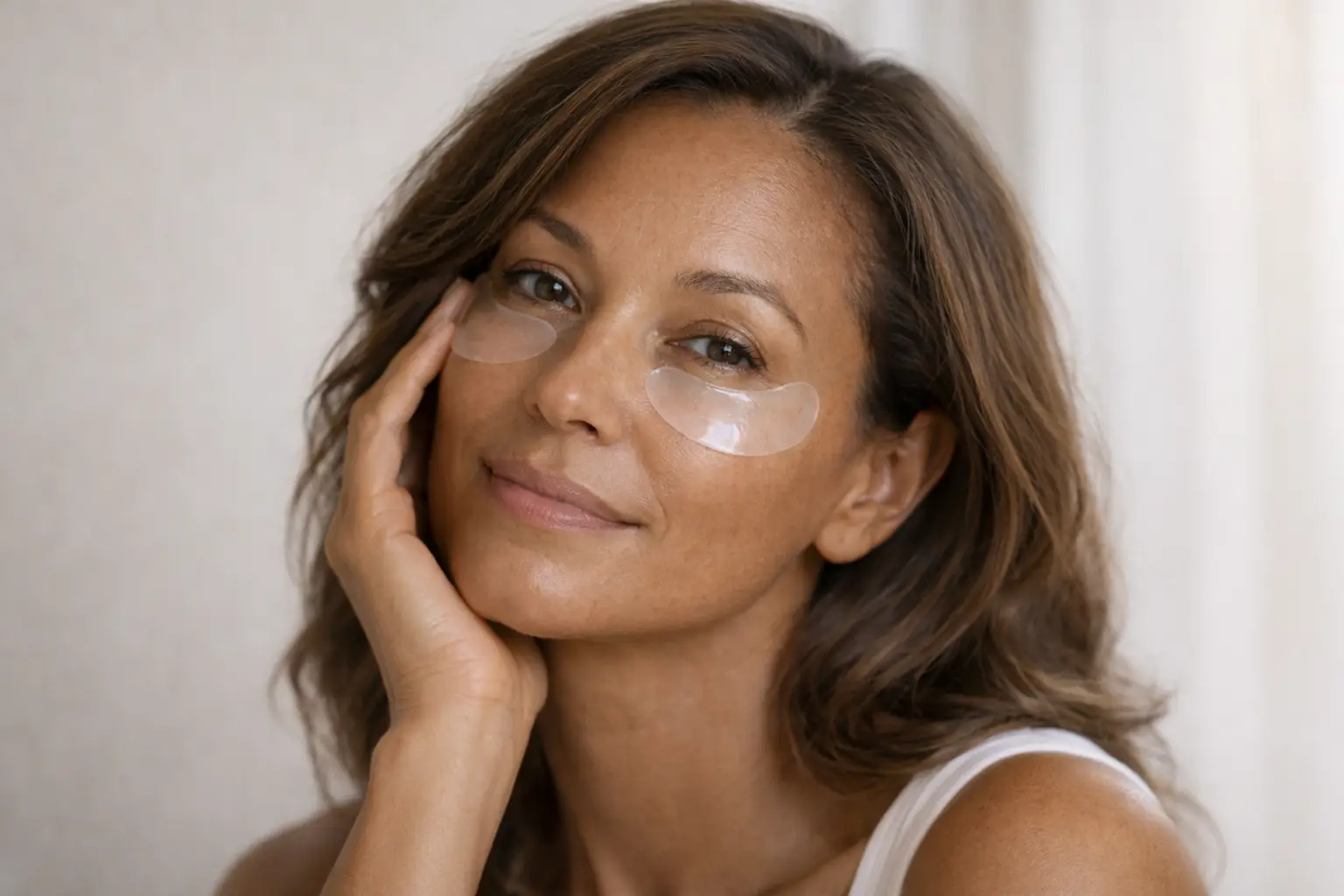
Under-eye patches are often marketed as a fix-all, which is why many people try them once and give up. The truth is more nuanced. What they help with, they help with well. What they don’t, they never will.
Puffiness vs Dark Circles: Why the Difference Matters
One of the main reasons under-eye patches get mixed reviews is that puffiness and dark circles are often treated as the same problem. They aren’t, and understanding the difference sets realistic expectations from the start.
Puffiness is usually related to fluid retention, inflammation, or fatigue. It can show up after sleep, long days, high salt intake, allergies, or dehydration. Because puffiness is temporary and surface-level, it tends to respond well to cooling, hydration, and gentle compression. This is where under-eye patches are most effective. They can help the area look calmer, smoother, and less swollen, even if the effect isn’t permanent.
Dark circles, on the other hand, are more complex. In many cases they’re caused by genetics, pigmentation, thinner skin, or the way light casts shadows under the eye. While hydration can soften the appearance slightly, eye patches don’t change underlying pigment or bone structure. Expecting them to do so is what often leads to disappointment.
When the concern is puffiness or surface dryness, eye patches can be genuinely helpful. When the concern is deep pigmentation or structural shadowing, they play a more limited role. Separating these two issues makes it easier to decide when eye patches are worth using and when they’re simply not designed to deliver the result being expected.
What Under-Eye Patches Can Realistically Improve
When under-eye patches work well, the results tend to be subtle but noticeable, especially when expectations are aligned with what they’re designed to do.
One of the most common improvements is temporary de-puffing. By cooling the skin and delivering surface hydration, eye patches can help reduce the swollen or heavy look that often appears under the eyes, particularly in the morning or after long periods of fatigue. This doesn’t eliminate puffiness permanently, but it can make the area look calmer and more refreshed for several hours.
Eye patches can also improve skin texture in the short term. Well-hydrated skin appears smoother and softer, which can make fine lines look less pronounced while the skin remains moisturized. This is especially noticeable in dry environments or during seasonal changes when the under-eye area tends to feel tight.
Another practical benefit is how makeup applies afterward. When the under-eye area is hydrated, concealer tends to sit more evenly, crease less, and look more natural. For many people, this alone makes eye patches worth keeping in their routine, even if the visible changes are modest.
What these improvements have in common is timing. The benefits are meant to support the skin in the moment, not to create lasting structural change. When used for comfort, hydration, and short-term smoothing, under-eye patches tend to deliver exactly what they promise — and no more than that.
What Under-Eye Patches Won’t Permanently Fix
One of the most important parts of using under-eye patches effectively is understanding their limits. While they can be helpful in specific ways, there are certain concerns they simply aren’t designed to resolve long term.
Under-eye patches won’t permanently eliminate genetic dark circles. If darkness is caused by pigmentation, thin skin, or underlying vascular structure, topical hydration alone won’t change that. In these cases, any visible improvement is usually temporary and related to surface smoothing rather than a true reduction in darkness.
They also won’t alter bone structure or natural facial contours. Shadows created by the shape of the eye socket or tear trough area are structural, not surface-level. Eye patches can soften the appearance of the skin in that area, but they can’t change how light naturally falls on the face.
Another common misconception is that frequent use will lead to cumulative correction. While regular hydration can help the under-eye area feel more comfortable and supported, eye patches don’t create long-term structural change on their own. Once they’re removed, the skin gradually returns to its baseline state.
Understanding these limitations doesn’t make eye patches less useful. It makes them easier to use without frustration. When they’re treated as a supportive tool rather than a corrective solution, they tend to feel like a helpful addition instead of a disappointment.
When Under-Eye Patches Are Actually Worth Using
Under-eye patches tend to be most useful in situations where timing and comfort matter more than long-term correction. When used with the right expectations, they can fit naturally into a routine rather than feeling like an extra step that doesn’t deliver.
They’re often worth using in the morning, especially after a poor night’s sleep or when puffiness is more noticeable. In these moments, the cooling and hydrating effect can help the under-eye area look calmer and more refreshed before starting the day.
Eye patches can also be helpful before events or meetings, when smoother texture and better makeup application are the goal. By hydrating the skin temporarily, they create a more even surface for concealer and reduce the appearance of dryness or creasing.
During periods of seasonal dryness, travel, or increased stress, the under-eye area can feel tight or uncomfortable. Using eye patches occasionally during these times can provide relief and support the skin barrier without requiring a major change to an existing routine.
Ultimately, under-eye patches work best when they’re used as a situational tool, not a daily obligation. When they’re applied thoughtfully and without exaggerated expectations, they can be a practical way to support the under-eye area when it needs it most.